A middle school that prepares for high school, and above all for life.
A bilingual, human-scale middle school that follows the French national curriculum and prepares for the brevet, with an active and innovative pedagogy, inspired by neuroscience and the work of Maria Montessori, and real-world projects.
September 2026: 18 places.
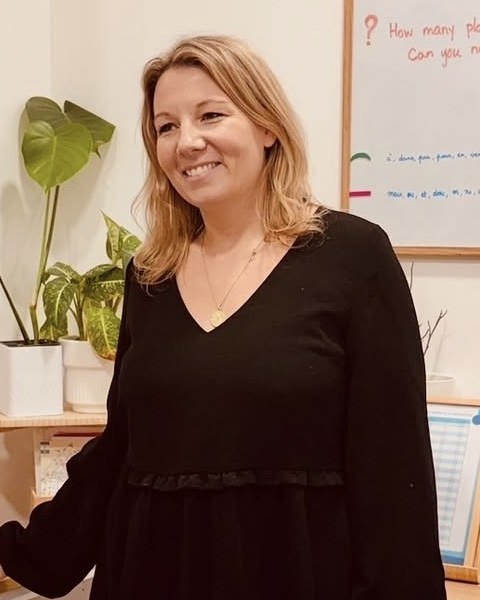

Before handing your thinking over to a machine, you first have to build it. In middle school, we train the brain to reason, remember and create on its own, so that AI later becomes a lever, not a cognitive debt.
Oriane Peillon, founder
There is a place for your teen at MPEM
Whether your teen comes from our school, another Montessori school or the mainstream system, has a demanding passion, or your family is moving from abroad.
The natural next step after elementary
The same high standards, the same kindness, and a team that already knows your child.
Continuing without a break in pedagogy
Independent work, projects, English every day: familiar ground, with the structure of middle school.
A different relationship with learning
Small classes and individual follow-up to find their feet.
A school that does not hold them back
High-level sport, music, dance, art: some teenagers need an alternative education that fits them. With small numbers, individual follow-up and learning organised in hubs, MPEM lets them progress at their own pace without giving up what drives them.
An international anchor
French and English every day, French- and English-speaking teachers, 25 nationalities among our families: expat children find an environment where their dual culture is a strength, while following the French national curriculum. We are used to welcoming students who do not yet speak French or English, and we support them so they quickly find their feet.

What makes MPEM
A differentiated, active and demanding approach to education, born of the experience of Ma Petite École Montessori.
Bilingual and truly international
French and English every day thanks to French- and English-speaking teachers working side by side. Introduction to Spanish from Grade 6. Preparation for Cambridge certifications.
Solid, demanding learning
French national curriculum and brevet preparation. French, maths, science, history-geography through active, hands-on teaching.
Growing together
Cooperative projects, shared responsibilities, debate and council time, in one multi-level class from Grade 6 to Grade 9: the group becomes a space of trust and critical thinking.
Real projects
A real business run by the students (this year, a stained-glass workshop), public speaking, artistic, cultural and civic projects.
A week at MPEM
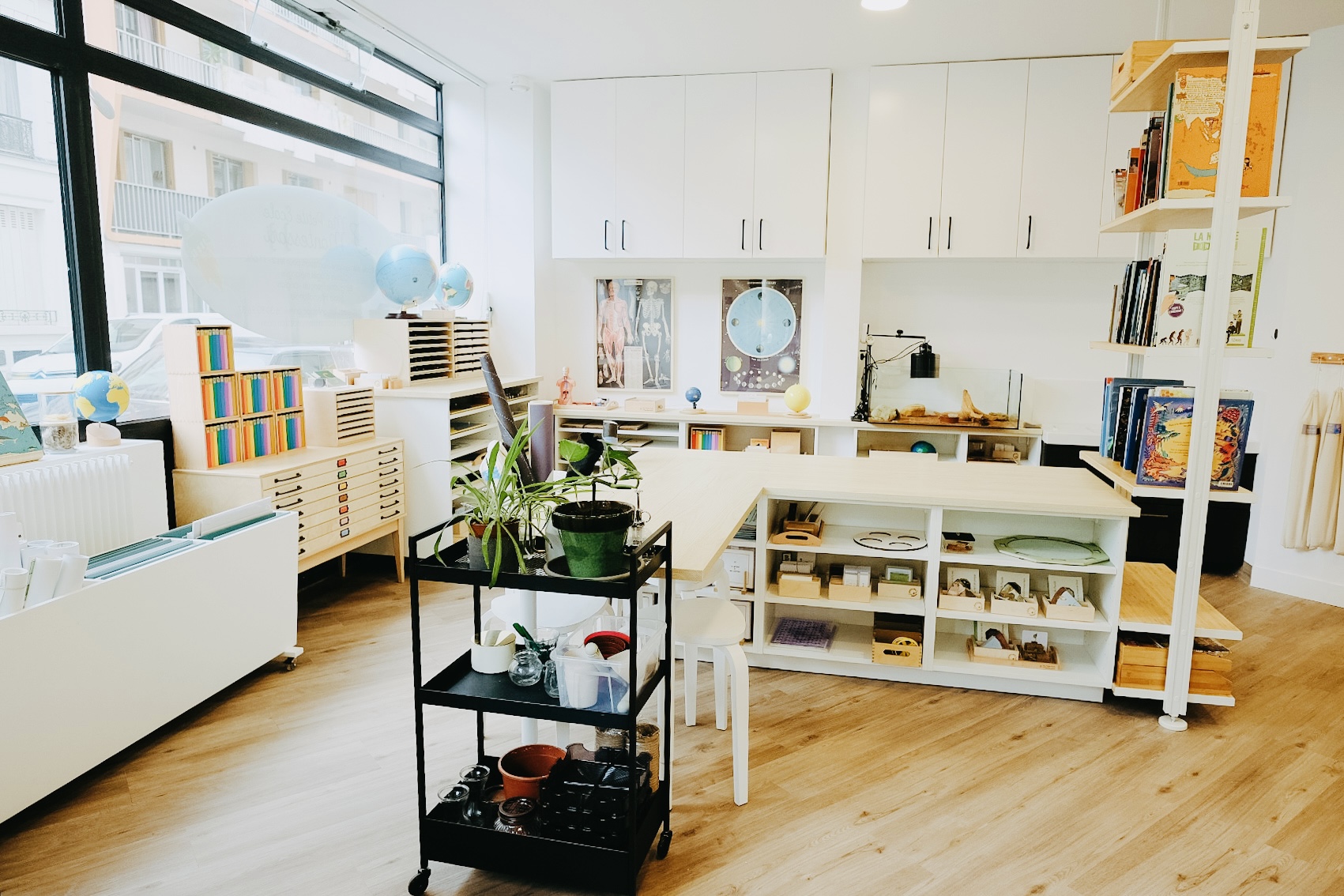
No back-to-back 55-minute lessons: hubs, so that every subject makes sense. To the question “what is this for?”, there is always an answer.
All sciences combined, maths included, applied to real situations.
French, English, history-geography, philosophy, literature. All bilingual.
Art, creative writing, drawing, pottery, sewing. Sport, nutrition, health, and understanding how we work.
A real business run by the students, and time given to others: care homes, outreach to homeless people.
Philosophy, public speaking, presentations of each student's research.
Lunch on site 4 days a week.
A social and responsible commitment
Beyond academics, we help our students understand their role as responsible, caring citizens.
- Litter clean-up operations to take concrete action for the environment
- Outreach to the most vulnerable, going out to meet homeless people
- Intergenerational visits to care homes to share activities with the elderly
- Taking part in charity sports events
- Student-led projects to protect heritage and the environment

Joining the middle school
An independent school: we are financed entirely by families' tuition fees, with no state funding.
Parents' questions
Another question? Oriane will answer on 06 30 90 96 37.
Are there grades?
No. Grades reward more than they assess: they favour those who find things easy and discourage the effort of those who do not. At MPEM, mistakes are treated for what they are: the moment when we learn.
Are classes split by level?
No, the class is multi-level: Grade 6, 7, 8 and 9 students work together, which builds independence and mutual help.
Does the school prepare for the brevet?
Yes. The school follows the French national curriculum and prepares students for the brevet. Each year they sit a brevet adapted to their level (Grades 6, 7, 8): by Grade 9, the exam is already familiar.
Which languages are taught?
French and English every day, with French- and English-speaking teachers. Introduction to Spanish from Grade 6. Students are prepared for Cambridge certifications.
Where is the school?
In the 15th arrondissement, around Parc Georges Brassens, where the school occupies three buildings.
The adolescent according to Maria Montessori
To go further into the foundations of our project.
The adolescent as seen by Maria Montessori
For Maria Montessori, adolescence is a period of deep transformation, as intense as early childhood. It is the age when the child becomes a young adult in search of identity, independence and meaning. She describes this stage as a time of great fragility, but also of extraordinary potential: adolescents need a secure environment that respects their need for freedom while giving them real responsibilities.
Montessori stresses the importance of developing:
- independent thinking, to learn to think for oneself;
- a critical and social sense, to understand the world and find one's place in it;
- creativity and action, to experiment, cooperate and build real projects.
Maria Montessori stresses that adolescents need the group to build themselves. It is through community life that they develop their identity, learn to cooperate and discover the meaning of commitment. The group offers a mirror, a space for social experimentation and a place of recognition. In a caring, structured setting, group dynamics foster mutual help, responsibility and a sense of belonging. It prepares young people to become adults able to live in and contribute to society.
According to Montessori, the adolescent is not just a student who learns: they are a young citizen in the making, who needs to be supported with confidence to develop all their intellectual, social and human abilities.
“Adolescence is a period of creation, of the construction of the social human being. It is the age when the adult who must integrate into society is born.” Maria Montessori
The adolescent's environment according to Maria Montessori
Maria Montessori believed that adolescence requires a specific environment, both protective and stimulating. At this age, young people do not only seek knowledge: they want to understand the meaning of what they learn and find their place in society. A suitable environment should therefore offer:
- A secure, caring setting that respects their need to belong and their emotional fragility.
- Real responsibilities, through concrete projects, collaborative work or experiences of community life.
- Openness to the world, through languages, travel, cultural exchanges and civic engagement.
- A space for independence and experimentation, where adolescents can try, create, make mistakes and start again without fear.
- A balance between intellectual and manual work, between theory and practice, to nourish the head as well as the hands and the heart.
The Montessori environment for adolescents thus aims to prepare not only competent students, but also confident, responsible and creative young adults, able to build their future and contribute positively to the world.
Come and see the school for real.
Meet the team and visit the premises with your teen.